Supports Implants
Grafting creates the strong bone foundation that implants, crowns, bridges, and dentures all need for long-term stability over many years of use.
Can a weakened jaw still support dental implants? In most cases, yes. A dental bone graft adds to the existing bone in your jaw, creating a stronger foundation for restorative treatment. Bone grafting in West Hollywood, CA, also helps preserve your facial structure and protect the teeth you still have.
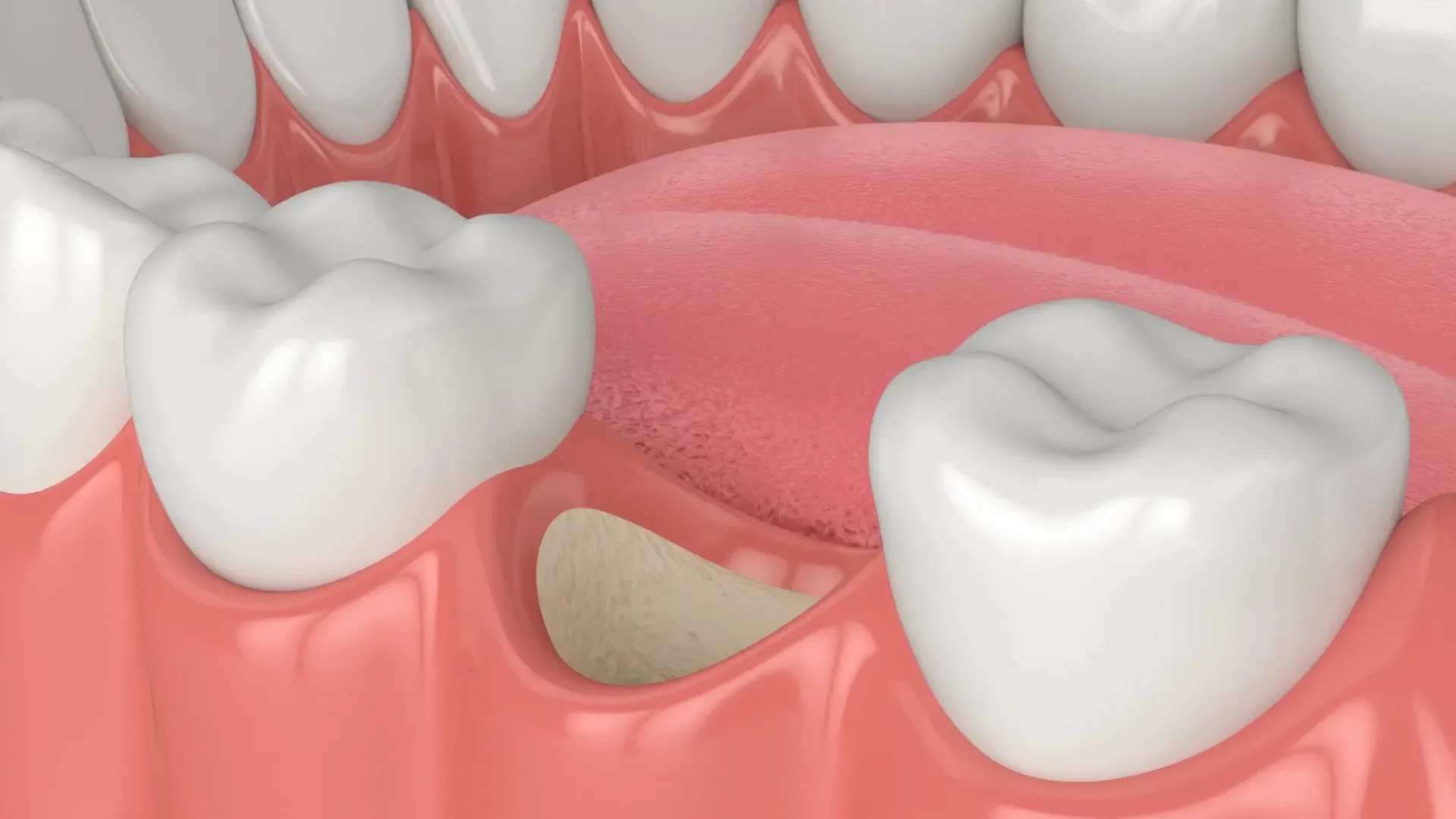
Dental bone grafting and augmentation are procedures used to increase the amount of bone in the jaw or other areas of the mouth. Grafts prepare the site for implants, bridges, or dentures, regenerate lost tissue, and repair defects. Common types include autografts, allografts, synthetic grafts, and xenografts.
Grafting creates the strong bone foundation that implants, crowns, bridges, and dentures all need for long-term stability over many years of use.
Bone lost to periodontal disease, dental trauma, or missing teeth can be restored back toward its original form and its original height.
A solid bony foundation holds your gums and your remaining teeth in their proper positions and reduces their mobility in the surrounding arch.
Restoring bone height supports the facial muscles and helps prevent the sagging that follows significant bone loss as you continue to age.
The grafting procedure is straightforward, and our dentist explains which material is being used and why before treatment begins.
Request an AppointmentWe take X-rays to determine whether your bone is lacking density and to map exactly where augmentation will be needed in the jaw or the sinus.
Our dentist reviews autograft, allograft, synthetic, and xenograft options and recommends the best fit for your situation and your health history.
The area receiving the graft is fully numbed before we begin, and sedation is available for patients who would prefer it throughout the appointment.
An opening is created in the gum tissue to expose the affected area of jawbone that is going to be built back up and carefully prepared.
The grafting material is placed onto the prepared site, and any remaining gaps are filled to rebuild the ridge properly for future treatment.
There are several types of dental bone grafts that are commonly used.
A piece of bone is taken from one area of the body and used to replace or supplement the missing or deficient bone in another area.
Donor tissue is used for the graft. Allografts are also commonly used in dental bone grafts.
Synthetic material is used to build up the area. Synthetic grafts are extremely popular with most patients.
Animal bone is used to build up the area. Xenografts are occasionally used.
Grafting is recommended whenever the jaw lacks the volume needed to support your teeth or a planned restoration.
Recent Extraction — Bone begins resorbing around the socket immediately, so a graft is often placed the same day that the tooth is removed in the weeks that follow.
Advanced Periodontitis — Gum disease destroys the supporting bone, and regeneration may be needed to stabilize the teeth that still remain in the surrounding arch.
Implant Planning — Imaging shows insufficient height or width at the intended implant site to hold the titanium post securely in place for many years to come.
Long-Term Loss — Areas missing teeth for years lose ridge volume, which makes bridges and dentures fit increasingly poorly over time and become uncomfortable.
We take X-rays first to confirm whether bone volume is genuinely lacking, rather than recommending grafting as a routine default for every case or where it is already adequate.
Most grafts are placed on the same day as the tooth removal, which preserves the ridge for the future and avoids a second surgical appointment or a lengthy healing delay.
Local anesthetic, careful surgical technique, and available sedation keep the procedure entirely manageable even for our most anxious patients who feel nervous about surgery.
We contact your provider to confirm whether grafting is a covered benefit, and we offer flexible financing options for the times when it is not available to cover the balance.
Real Patients, Real Stories

I reached out to Dr. Rivas regarding the extraction of my number 16 wisdom tooth. My previous dentist referred me to an oral surgeon who wanted to extract the other three wisdom teeth even though I am not experiencing any issues and during that time I never had any consultative discussions with the surgeon. I connected with Dr. Rivas and she was thorough and transparent when speaking over the phone and she shared that she would be able to extract my tooth. During the procedure, she was extremely caring, asked if I was numbed properly, and checked in with me frequently during the procedure. I did not feel a thing and I was shocked on how fast she was able to successfully extract my tooth. I highly recommend Dr. Rivas and her staff and I commend them for their professionalism and caring nature. I live in the Inland Empire and will be driving to West Hollywood since Dr. Rivas will be my dentist moving forward.
Thank you to Weho Dental studio and Dr Rivas for helping me get over my fear of going to the dentist. Felt immediately at home with her and her lovely staff. From the front desk to the hygienist, I really felt like they genuinely cared about my dental health, rather than some of the other offices I’ve been to that immediately tried to push tons of treatments. Dr Rivas and her staff took care of me, happy to call this my dental home. Thank you for making fillings and a crown a pleasant experience!
Dr. Rivas was awesome! Staff are great and friendly. I was surprised that my filling took less than an hour and I did not feel any inch of pain. The procedure was so smooth and appreciate that Dr. Lisa walked me through to every step. Highly recommended!
really lovely, kind staff— i felt at ease and taken care of! everything was explained to me, and the environment was serene. thank you dr rivas!
Don't see the answer you're looking for? Call us at (310) 278-9121.
Costs vary with the complexity of the procedure and the material used, generally ranging from a few hundred to a few thousand dollars. We verify insurance first.
The site is fully numbed during the procedure. Most patients manage afterward with over-the-counter anti-inflammatories and report mild soreness rather than pain.
Healing time depends on the size of the graft and the site. Our dentist gives you a timeline at your consultation and confirms readiness with imaging.
No. Grafting also supports bridges and dentures, stabilizes teeth affected by periodontal disease, and repairs defects caused by trauma or infection.
Grafts are generally not needed when removing baby teeth or wisdom teeth, since those sites are not being prepared for a replacement tooth.
Find out more about the dental bone grafting and augmentation process and whether it is the right step before your restorative treatment. Request a grafting consultation, and we will review your imaging with you at the visit.
Request a time using the form, or prefer to talk it through? Call us at (310) 278-9121.
We'll reach out to confirm your time.